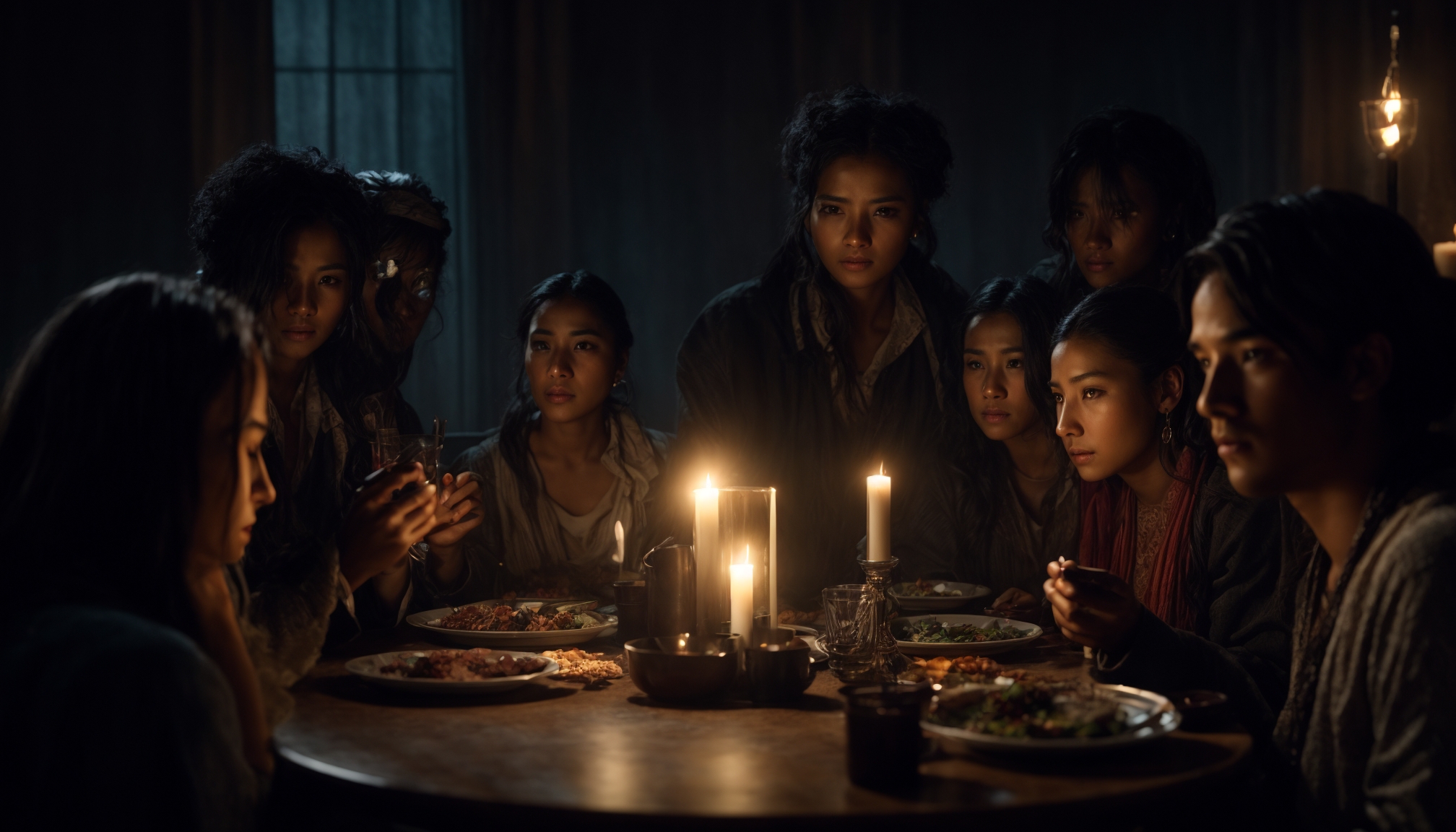
Horror Yearbook – Countless legends describe the scariest folklore creatures worldwide, terrifying communities with tales of curses, monsters, and restless spirits that refuse to fade.
The scariest folklore creatures worldwide survive because they touch primal fears. These monsters lurk in forests, oceans, and even family homes. They explain disappearances, misfortune, and nightmares. In modern life, their stories adapt to movies and games. However, their roots stay firmly tied to local beliefs and taboos.
Across continents, communities pass down warnings through these tales. Children learn not to wander at night. Sailors fear unknown waters. Travelers respect sacred places. As a result, the scariest folklore creatures worldwide remain cultural tools to enforce rules and protect traditions.
Europe offers some of the scariest folklore creatures worldwide, often tied to religion, disease, and war. The classic vampire, like Count Dracula from Eastern Europe, reflects fear of the dead returning. Legends describe pale figures leaving graves to drink blood and spread illness. These stories grew stronger during historical plagues.
Witch legends in Central and Western Europe add another layer of horror. Accusations of witchcraft led to trials and executions. Tales describe women and men who fly at night, curse livestock, or cause storms. Meanwhile, creatures like the Black Shuck of England, a giant ghostly dog with burning eyes, are said to appear before disaster or death.
In the Alps, the Krampus stands out. This horned creature punishes misbehaving children, dragging them with chains and sacks. The Krampus shows how winter folklore mixes fear with moral lessons. Therefore, even holiday traditions include the scariest folklore creatures worldwide in their own way.
Asia is home to many of the scariest folklore creatures worldwide, especially vengeful spirits. In Japan, the onryō are ghosts who died with intense rage or sorrow. They return to torment the living, often with long black hair, white clothing, and disfigured faces. Modern horror films directly draw from these images.
In China, the jiangshi or “hopping vampire” is a stiff corpse that moves by jumping. It drains life energy from victims. Taoist talismans are said to stop it. On the other hand, Southeast Asia features terrifying female spirits, such as the pontianak or kuntilanak, who attack travelers and pregnant women.
India’s folklore includes shape-shifters like the rakshasa, cunning demon beings that can disguise themselves as humans. These myths warn people not to trust appearances. Consequently, the scariest folklore creatures worldwide in Asia often blur the line between human and monster, emphasizing betrayal, grief, and revenge.
Across North and South America, colonization and indigenous traditions combine to create some of the scariest folklore creatures worldwide. In North American indigenous lore, the Wendigo symbolizes greed and cannibalism. It is often described as a gaunt, skeletal figure with glowing eyes and a hunger that never ends.
Latin America contributes La Llorona, the Weeping Woman who haunts rivers and lakes after drowning her own children. Parents use her legend to warn children away from dangerous waters at night. Her endless crying and white dress appear in many local stories, shows, and films.
Other creatures, like El Cuco or El Coco, hide in dark corners to snatch misbehaving children. These legends travel between countries, reshaping themselves with each culture. Therefore, the scariest folklore creatures worldwide in the Americas often serve as cautionary figures for families and communities.
Africa’s rich oral traditions present the scariest folklore creatures worldwide through desert demons, forest spirits, and river monsters. In some West African stories, creatures lurk in rivers to drag the careless underwater. They punish those who disrespect sacred waters or ignore safety.
In North Africa and the Middle East, the ghoul haunts abandoned places, graveyards, and lonely roads. It feeds on corpses or even living travelers. This monster reflects fears of isolation and desecration of the dead. Meanwhile, jinn appear in many Arabic tales, sometimes helpful but often dangerous when disrespected.
Because many communities relied on harsh landscapes for survival, their monsters often inhabit dunes, caves, and oases. Consequently, the scariest folklore creatures worldwide from these regions remind people to treat nature and the unseen world with caution.
For seafaring cultures, the ocean hides some of the scariest folklore creatures worldwide. Sailors describe monstrous serpents rising from storms, dragging entire ships into the depths. These legends helped explain vessels that vanished without a trace.
Merfolk are not always romantic. In certain stories, sirens lure sailors with beautiful songs, then lead them onto rocks. Meanwhile, Scandinavian tales of the Kraken describe a massive tentacled beast capable of swallowing ships. These ocean myths echo the fear of vast, unknown waters.
Because technology could not reveal the deep sea, people filled it with horrors. Even now, popular media reuse these creatures. As a result, the scariest folklore creatures worldwide from the ocean still shape how we imagine what lies beneath the waves.
The scariest folklore creatures worldwide now dominate horror films, novels, and video games. Their designs evolve, but their core fears remain. Directors turn ancient ghosts into cinematic icons. Writers adapt regional demons into global villains. Nevertheless, local communities still recognize the original legends behind these new versions.
Read More: How different cultures created terrifying monsters to explain the unknown
Psychologists argue that the scariest folklore creatures worldwide act as mirrors. They reflect guilt, grief, greed, and fear of death. By telling and retelling these stories, people confront emotions that they cannot easily express. In addition, these tales strengthen cultural identity by connecting generations.
Museums, podcasts, and online communities now collect regional legends. Fans share artwork and adaptations of their favorite monsters. Because of this, the scariest folklore creatures worldwide no longer stay inside one village or country. They travel quickly across borders, entering global pop culture while staying rooted in specific histories.
The continued power of the scariest folklore creatures worldwide shows that fear never disappears, it only transforms. Urban legends about shadowy figures in parking lots or haunted hotels follow the same patterns as ancient ghost stories. People still warn loved ones with frightening tales, hoping to protect them from danger.
Furthermore, the scariest folklore creatures worldwide help preserve languages, rituals, and beliefs. When elders share stories, they also pass down values about respect, courage, and responsibility. Young listeners learn which places to honor and which actions to avoid.
Ultimately, the scariest folklore creatures worldwide remind us that every culture has its monsters, and those monsters say something important about the people who imagine them. By listening to these tales carefully, we understand both the fear and the wisdom hidden inside centuries of horror.