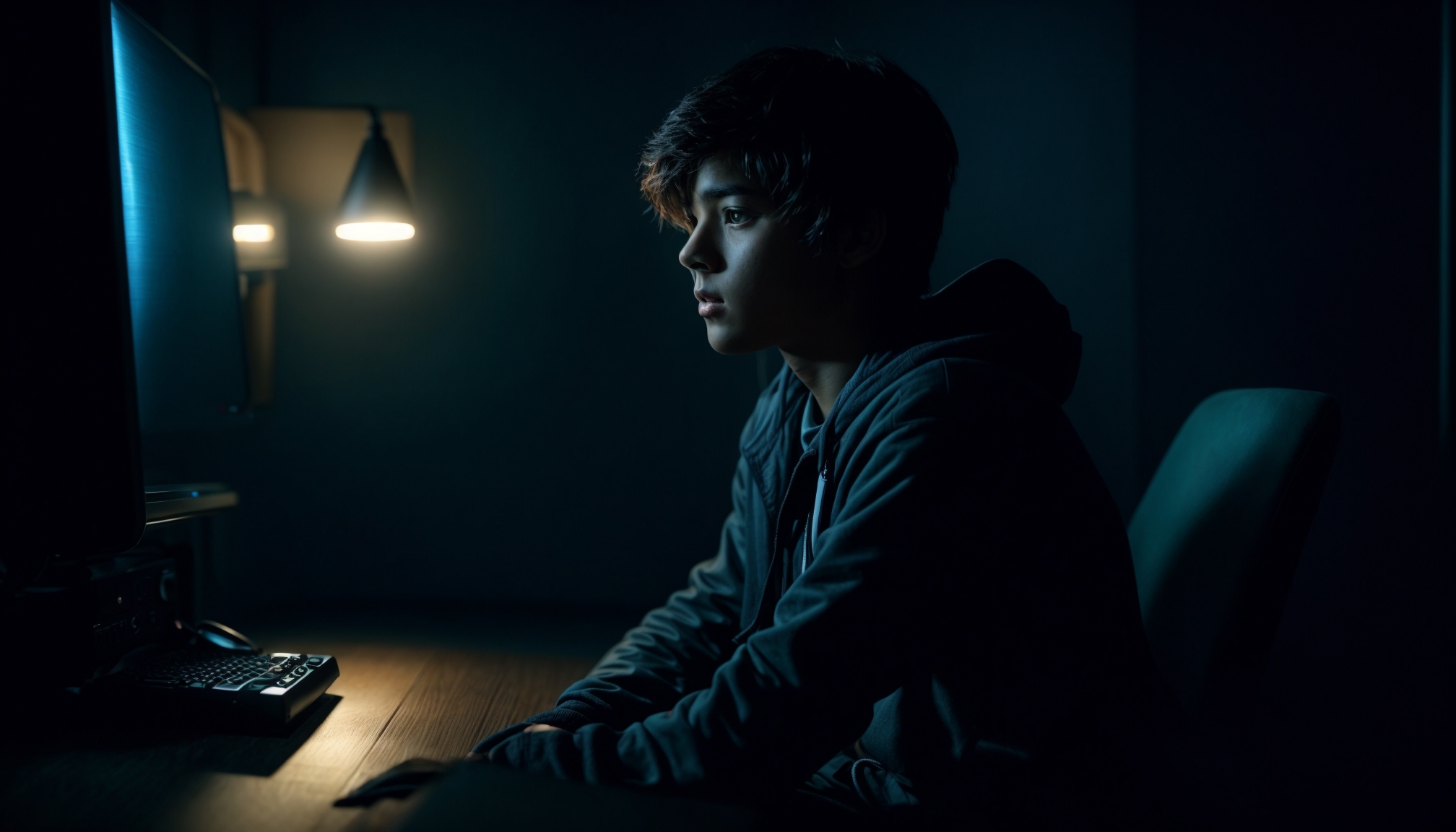
Horror Yearbook – Many designers now treat silence in horror games as a powerful weapon that shapes fear more effectively than loud jump scares.
Used with intent, silence in horror games creates tension before any monster appears. Players start to hear their own breathing. Their imagination fills the void with unseen threats. This is exactly why silence in horror games often feels more painful than any loud scare.
Developers use audio gaps to control a player’s pulse. Short bursts of quiet force you to lean forward and focus. Longer stretches leave you exposed, wondering what you are missing. Because the brain hates uncertainty, silence in horror games turns every corridor into a trap.
On the other hand, constant noise quickly becomes background. Players adapt. However, real quiet keeps the mind alert. Every tiny creak gains meaning. As a result, silence in horror games becomes a psychological knife, twisting slowly instead of cutting fast.
Modern horror teams treat sound like level design. They place silence where other genres use music. This planned quiet guides attention and emotion. Carefully shaped tension curves show how silence in horror games can steer the player without any on-screen arrows.
First, designers remove music entirely from key areas. Only bare ambience remains. Footsteps, distant wind, maybe a faint hum. Because of that, any new sound feels like an intruder. Second, they shift volumes to exaggerate contrast. After loud chaos, sudden calm feels wrong. Silence in horror games often signals that something worse is coming, even when nothing appears.
Finally, studios combine silence with haptic and visual cues. A controller vibration or flickering light replaces an orchestra. Players feel stranded, with no audio track to protect them. In that state, silence in horror games does not relax; it suffocates.
Some of the most praised titles in the genre rely on quiet more than any monster roar. Their most memorable scenes show exactly how silence in horror games can define an entire experience.
In the original “Silent Hill” series, fog hides the distance while sound often drops to almost nothing. Only squishy footsteps and radio static remain. Because players cannot see far or hear much, every step feels unsafe. This makes silence in horror games there feel like a thick, choking mist.
Meanwhile, “Amnesia: The Dark Descent” removes music during exploration and lets environmental sounds breathe. You only hear water drips, doors, and your character’s panicked breathing. After that, even a tiny clank from another room becomes a signal of doom.
Psychology studies show that humans tend to imagine worst-case scenarios in uncertain situations. Developers exploit this response. They create long stretches where nothing happens, then reward your fear with a single event. This rhythm makes silence in horror games feel like a loaded gun on the table.
Besides, quiet moments allow players to project personal fears onto the space. A dark hallway with no music becomes a mental canvas. Every player paints a different monster in their mind. Therefore, silence in horror games scales perfectly to each individual’s anxiety.
Even multiplayer horror experiments with quiet. In asymmetrical titles, voice chat often dies when tension rises. Friends whisper instead of shout. That shared silence in horror games turns cooperation into a hushed survival ritual, thick with dread.
New teams can learn key rules from previous successes. First, they must respect pacing. Silence in horror games only works when surrounded by contrast. Without spikes of danger, quiet becomes simple boredom instead of fear.
Second, they should let environments speak. Creaking floorboards, distant sirens, or buzzing lights create texture. When music cuts, these details keep immersion alive. Thoughtful layering proves that silence in horror games is never truly empty; it simply moves focus to smaller sounds.
Third, interface design must stay minimal. Loud menu beeps or constant radio chatter destroy the illusion. Clean HUDs and subtle notifications let the audio space breathe. Because of this restraint, silence in horror games can stretch out and occupy the player’s entire attention.
Fans often recall not the loudest scenes, but the stillest. For many, the most chilling sequence is walking through an abandoned hallway while nothing seems to happen. That is where silence in horror games reaches full power.
One famous example appears in “Outlast,” when the player leaves a noisy chase and suddenly enters a room with almost no sound. Only a flickering fluorescent lamp hums overhead. The contrast between chaos and calm hits like a punch, proving again that silence in horror games can carry more weight than any musical sting.
Another example lies in “Alien: Isolation.” Hiding in a locker, players listen for distant thuds and vents. Sometimes there is only pure quiet. In that vacuum, the alien feels closest. Your own heartbeat fills the gap, showing how silence in horror games merges player body and virtual space.
Across classic and modern titles, one truth stands out: silence in horror games is never neutral. It shapes pace, mood, and memory. It makes players suspicious of every shadow, every door, every breath.
Developers who understand this treat quiet as carefully as any creature model or cutscene. They carve gaps into the soundtrack, trusting the audience to meet them halfway. When that happens, silence in horror games becomes the loudest scream, echoing long after the console powers down.
Players may forget exact plot details. However, they remember the times they froze in place, headphones on, listening to absolutely nothing and feeling more afraid than ever. That lingering sensation proves the lasting power of silence in horror games as the ultimate invisible weapon.
For those who want to revisit these chilling techniques and scenes, exploring more titles that master silence in horror games can be as unnerving as any haunted house.