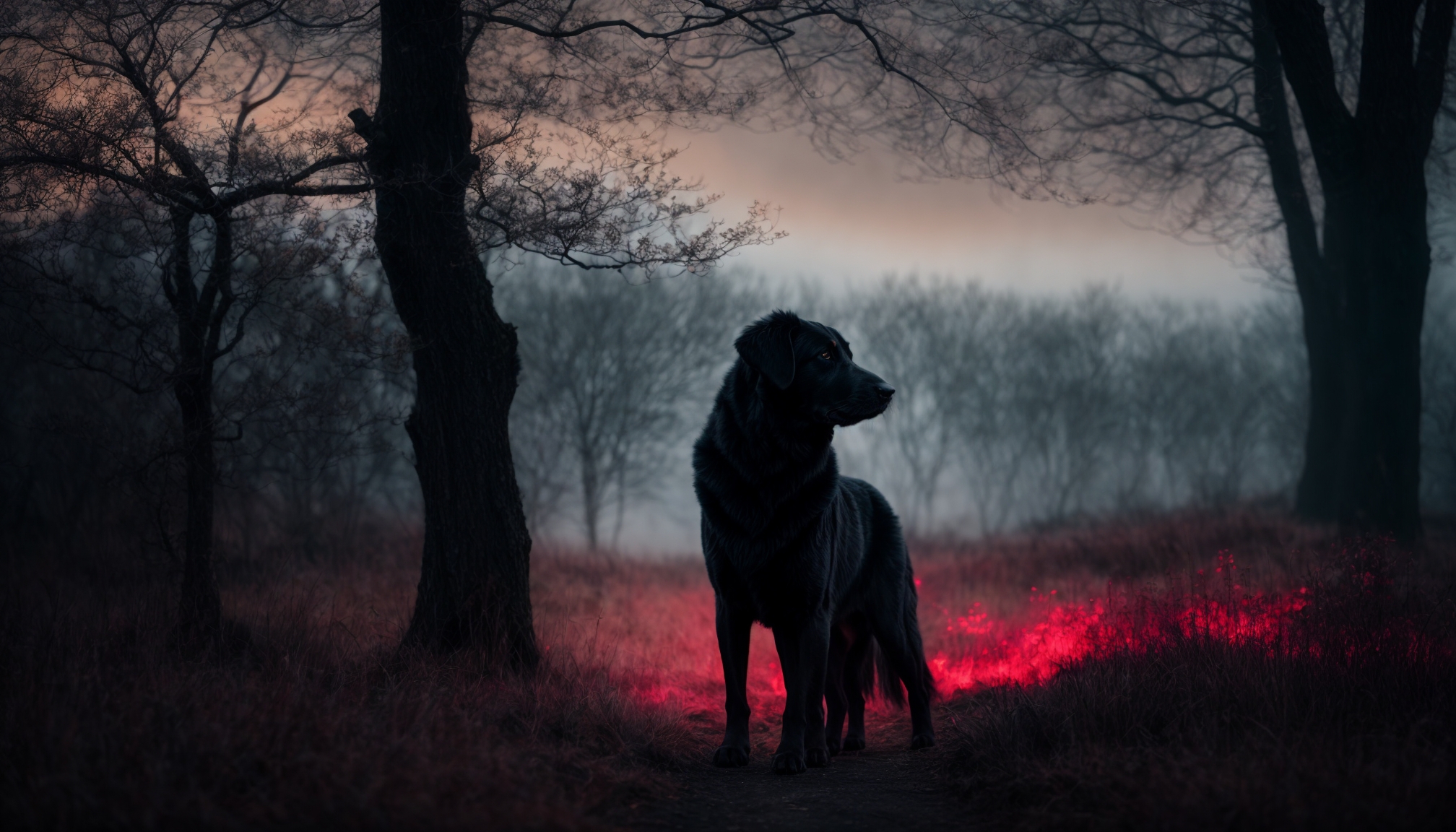
Horror Yearbook – The black dog mystery captivates many with tales of a ghostly canine said to appear in rural England as an omen of death, weaving fear and fascination into local folklore.
The black dog mystery traces back centuries in English folklore, describing a large, spectral black canine usually spotted near roads, moors, or remote villages. Its presence is often linked with imminent death or grave misfortune. Scholars believe that these stories may have roots in ancient beliefs or religious symbolism that cast black dogs as supernatural guardians or unlucky harbingers.
Throughout the English countryside, numerous reports chronicle encounters with the black dog mystery. Witnesses describe a ghostly figure with glowing red or fiery eyes that instills dread. Variants such as the Barghest, Black Shuck, and Padfoot represent regional adaptations, each with slight differences but the same eerie message: the approach of death or disaster in the area.
Read More: Explore British Folklore and Mythical Creatures
The black dog mystery continues to influence modern literature, film, and art. Authors and filmmakers use it to evoke supernatural suspense and symbolize depression or loss. Its persistent presence in popular culture illustrates how the legend endures, adapting to contemporary fears even as it preserves traditional rural superstitions.
The black dog mystery epitomizes how folklore bridges history and human emotion. Whether viewed as a symbol of death or a psychological manifestation of fear, its stories compel reflection on mortality and the unknown. The black dog mystery remains a powerful emblem in England’s cultural heritage, haunting both landscape and mind.
For more detailed exploration, visit the black dog mystery for comprehensive insights into this enduring legend.